A coach's magnetic board, in plain words
See the space. Follow the movement.
Orientation
Read the first shape
Before anything moves, a team stands in a shape. That shape is not a promise about style; it is a starting map of who is near whom, and where the gaps begin.
A shape is a set of distances
Read "4-3-3" as three questions: how far apart are the lines, how wide is each line, and who is first to leave it? The answers change every few seconds.
Read a movement pattern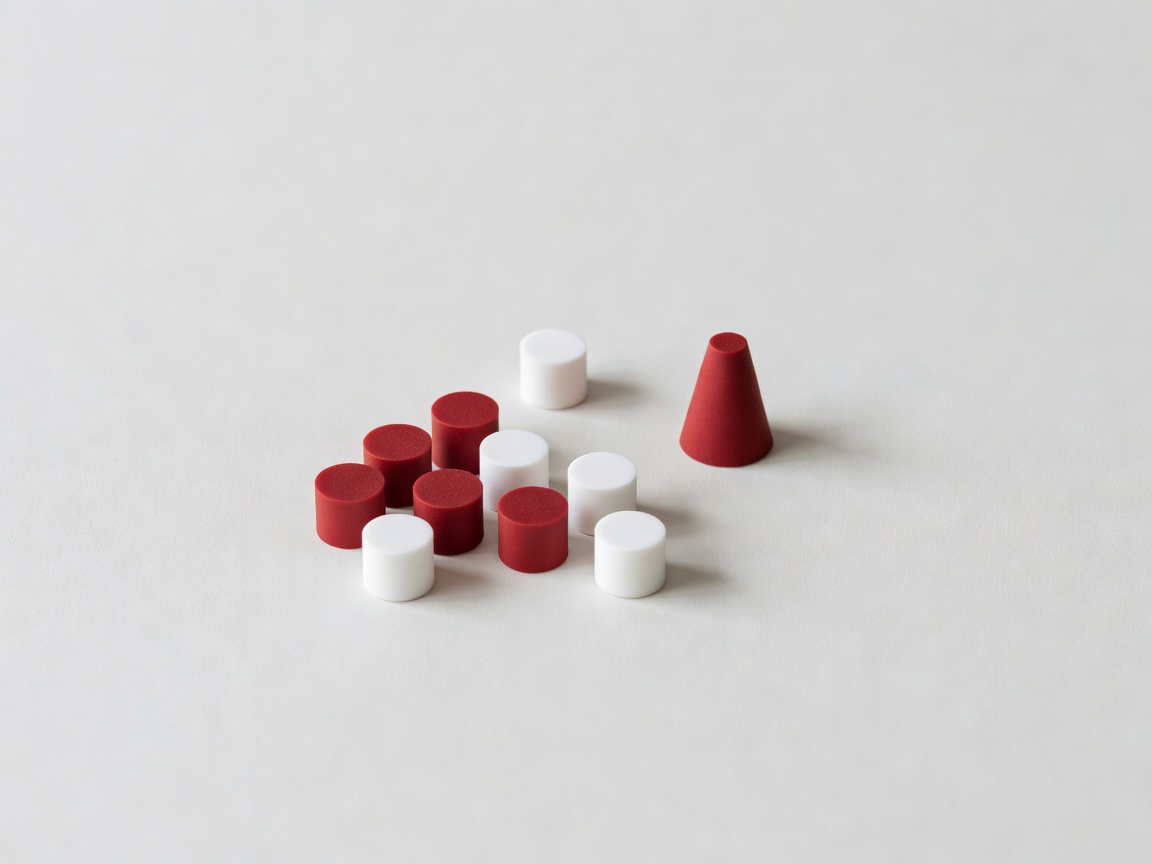
Count the lines
Look for horizontal bands of players. Two lines feel compact; four lines create more steps to pass through.
Find the widest players
Who touches the touchline? Width tells you how far the opponent must stretch to cover the whole pitch.
Watch who moves first
The first player to leave the line usually reveals the plan: a full-back pushing up, or a forward dropping in.
Positioning
Space creates the option
Space is rarely found; it is made. One player stands still or runs away so that a gap appears somewhere else. Follow the three frames below from left to right.
Staying still is a movement too
In frame one, the winger's most useful action is to do nothing. By holding his position he keeps one defender occupied, a coaching idea often called "pinning". Spaces open when defenders must choose between two jobs.
See how space is built
Defending
Pressure changes the picture
Defending is mostly about deciding which passes you are willing to allow. A good press does not chase the ball; it closes the routes that matter.
Three things a presser watches
- The ball: how quickly can I reach it?
- The lane behind me: my body should hide the pass I fear most. Coaches call that hidden lane a "cover shadow".
- My teammate: if I jump, who covers the space I leave?
When all three line up, the press works. When one is missed, a single pass beats several players at once.
Follow the press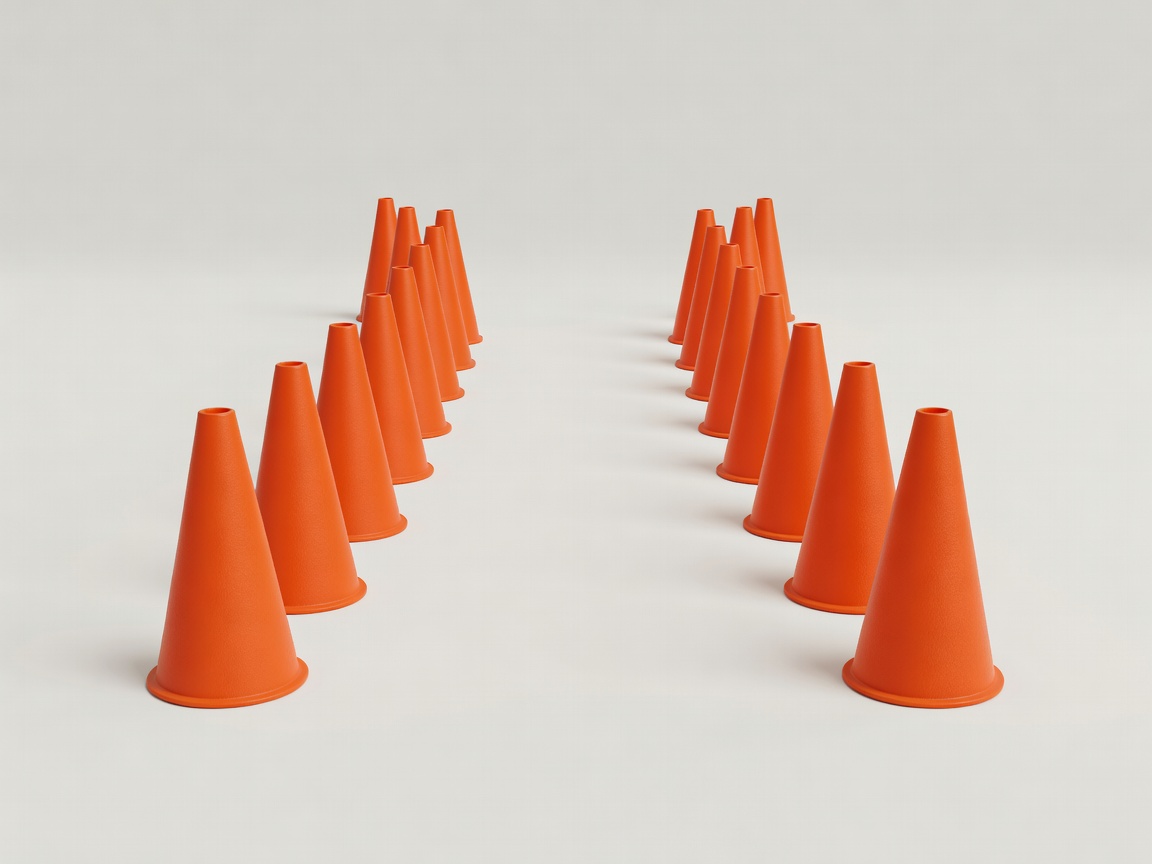
Not every team presses high
Diego Simeone's Atlético Madrid became famous for a compact 4-4-2 that often waited in midfield, while Jürgen Klopp's Liverpool hunted the ball near the opponent's goal. Both choices were coherent. One gives away territory to protect the space behind; the other risks the space behind to win the ball sooner.
Transitions
The moment possession turns
For a few seconds after the ball changes hands, both teams are out of shape. Whoever reorganizes first usually wins the moment.
Counter-press
Win the ball back within a few seconds, while the opponent is still disorganized. It needs players close together when the ball is lost.
Regroup
Drop quickly behind the ball and rebuild the block. It concedes time, but protects the space behind the defence.
Study the turnStrategy matrix
Compare the trade-offs
Each approach buys something and pays for it somewhere else. Scroll the table sideways on small screens.
| Approach | Core relationship | Asks players to | Gives the team | Risks | Familiar reference |
|---|---|---|---|---|---|
| High press | Pressers vs. opponent's first pass | Sprint together on a shared trigger | Turnovers near goal | Space behind a high line | Klopp's Liverpool, Rangnick-influenced Leipzig |
| Mid-block | Compact lines vs. central passing lanes | Hold distances, shuffle sideways | Protection of the middle | Pressure arriving late | Simeone's Atlético Madrid |
| Low block | Defenders vs. space in the box | Defend deep, clear crosses | Very little space behind | Long spells without the ball | Mourinho's Inter, 2010 |
| Positional possession | Spacing vs. opponent's marking choices | Occupy set zones, pass precisely | Control of tempo | Exposure if a pass is lost centrally | Guardiola's Barcelona and Manchester City |
| Direct play | Forwards vs. defenders in aerial and second-ball duels | Win flick-ons, crowd the landing zone | Fast territory gains | Lower ball retention | Many lower-league and cup underdogs |
| Counter-attack | Runners vs. an unsettled defence | Defend compactly, then sprint | Chances against open space | Little control if the plan stalls | Ranieri's Leicester City, 2015–16 |
Eight FAQs
Questions from the touchline
Does a formation decide how a team plays?
No. A formation describes starting positions. How players move with and without the ball tells you far more about the team's plan.
Which formation is the best?
None is universally best. Every shape trades coverage in one area for exposure in another, so the right choice depends on players, opponents and the score.
What is a half-space?
The vertical channel between the wide lane and the central lane. A player there can see the goal, the wing and the middle at once, and is awkward to mark.
What is a pressing trigger?
A shared cue, such as a backward pass, a heavy touch or a pass towards the touchline, that tells several players to close down together.
What is a transition?
The few seconds after possession changes hands, when both teams are out of their planned shapes.
What is rest defence?
The players a team keeps behind the ball while attacking, positioned to stop a counter-attack if possession is lost.
Why do wingers stay wide without getting the ball?
Their width pins the opposing full-back, which keeps the gap beside the centre-back open for a teammate.
Can I use these diagrams with my amateur team?
Yes, for personal and non-commercial coaching use as described in our terms. Introduce one relationship per session.